Article · 20 November 2026 · Svenska

SIME 2026 · A House Sickla, Stockholm

Change cannot be ordered

Two days on what makes people and organisations change – and a workshop where we asked what technology must never do to people.

By Birgitta Thörn, CEO HolistalReading time 6 min

It is not enough to introduce a new way of working, or to tell people to be curious. That was the clearest common thread in the talks I chose to attend at SIME 2026.

Change grows when people are given meaning, involvement, room to explore and the chance to try out ideas. That applied to the conversations about AI and leadership on day 1, and to day 2's questions about how Sweden and Europe move from good ideas to real capability.

Don't wait for everything to be certain or perfect. Choose a direction, start small and test with your users.

For us at Holistal, the two days were a confirmation. This is exactly how we believe health changes too: in small steps, close to people's everyday lives, with support at the right moment.

Birgitta ThörnCEO, Holistal

Day 1 · 19 November

People first – also when AI comes in

A selection of the talks I attended. Day 1 was about creating the conditions for change: through curiosity, people's own experiences and an honest picture of how the organisation actually works.

AI and leadership

Curiosity cannot be commanded

Intrinsic motivation often drives learning better than external rewards. Curiosity has to grow through exploration and meaningful questions.

When people share their discoveries, knowledge spreads between individuals and teams.

Samhällsnytta – Kajsa Westling and Matilda Legeby

Start with people's own experiences

Samhällsnytta showed how the public sector can work in a more preventive, person-centred way. Around the wellbeing of children and young people, they created meeting places where young people, municipalities, regions and other actors developed and tested ideas together.

In Säffle and Uppsala the projects live on: young people gained more influence, pupils started using a conversation tool and a meeting place for young people took shape.

Ola Möller, Dark Context / MethodKit

The organisation's hidden context

Ola described "dark context": the knowledge of how decisions are really made and who needs to be involved, which is rarely spoken or written down. There is often a gap between the culture an organisation describes and the one people actually meet.

If that context is never made explicit, AI risks giving generic answers. Employees need to put their knowledge into words – for their colleagues and for AI.

Per Cromwell, The Great Exhibition

Dare to do the unexpected

The creative studio builds experiences that widen our sense of what is possible. Their home-built rollercoaster created engagement and strengthened the creative culture.

It drew so much attention that it almost overshadowed the studio's other work – a reminder that even spectacular initiatives have consequences.

Day 2 · 20 November

From good ideas to real capability

A selection of the talks I attended. Day 2 centred on how Sweden and Europe can meet rapid technological and geopolitical change – quickly, securely and on their own terms.

Technological sovereignty – Moon-Suck Song, Panagora

Sweden creates – others own

Sweden is good at innovation in music, games and technology, but the ownership and value often end up elsewhere. Europe needs its own capability in digital infrastructure, cloud, AI and platforms.

That calls for strategic investment: support for entrepreneurs, partnerships and conditions that let European companies grow globally.

Europe's economy and AI – Stefan Fölster, Better Future Economics

Europe is not simply falling behind

GDP comparisons can be misleading. Europe performs well on, for example, life expectancy and healthcare.

Stefan Fölster questioned the ideas that AI will mainly destroy jobs and that the state should pick the technologies of the future. Entrepreneurship and continuous experimentation matter more.

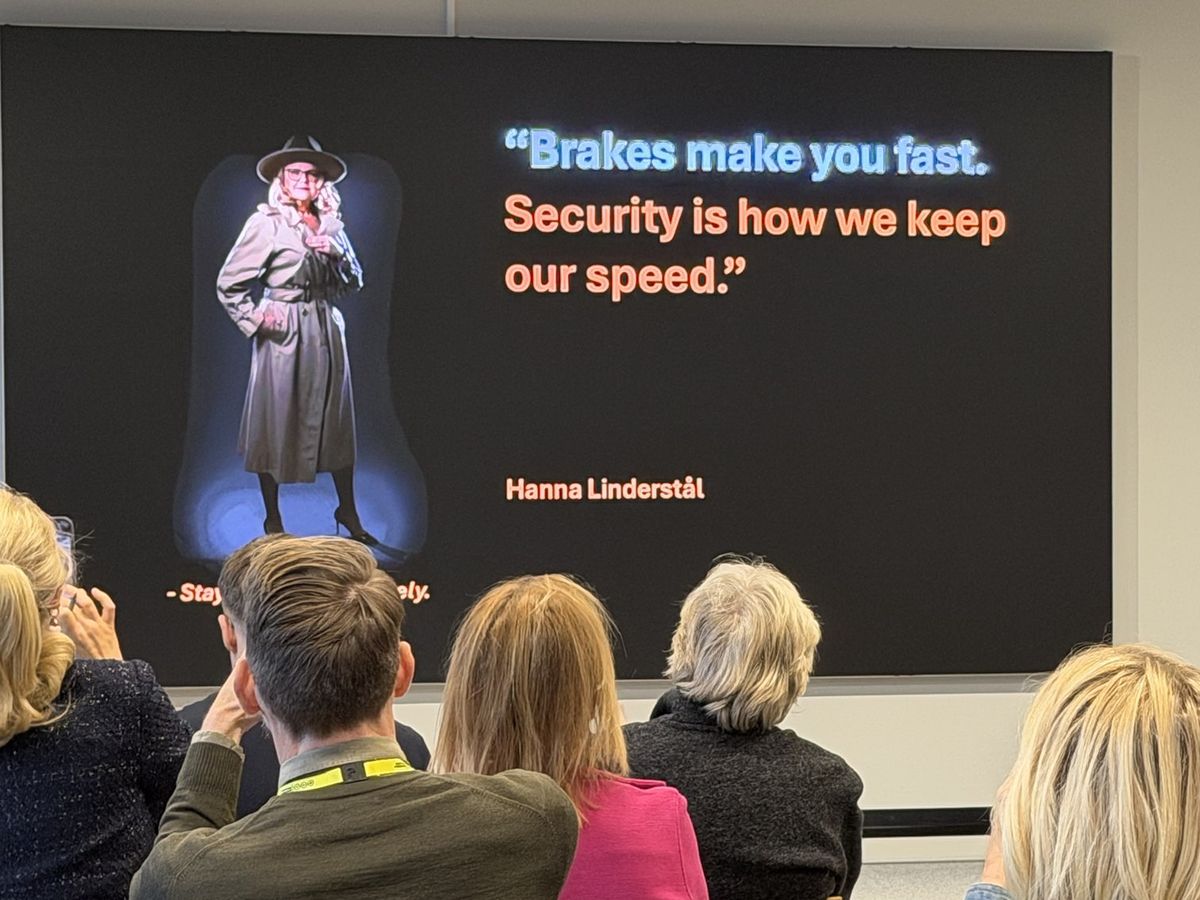
Cyber resilience – Hanna Linderstål, Earhart

Know what is critical

Cyber threats, GPS jamming and attacks can hit vital societal functions – not least the OT systems that run hospital equipment, pumps and power grids, and AI tools used without the organisation's knowledge.

Appoint system owners, plan to keep working when a service goes down and rehearse crises regularly.

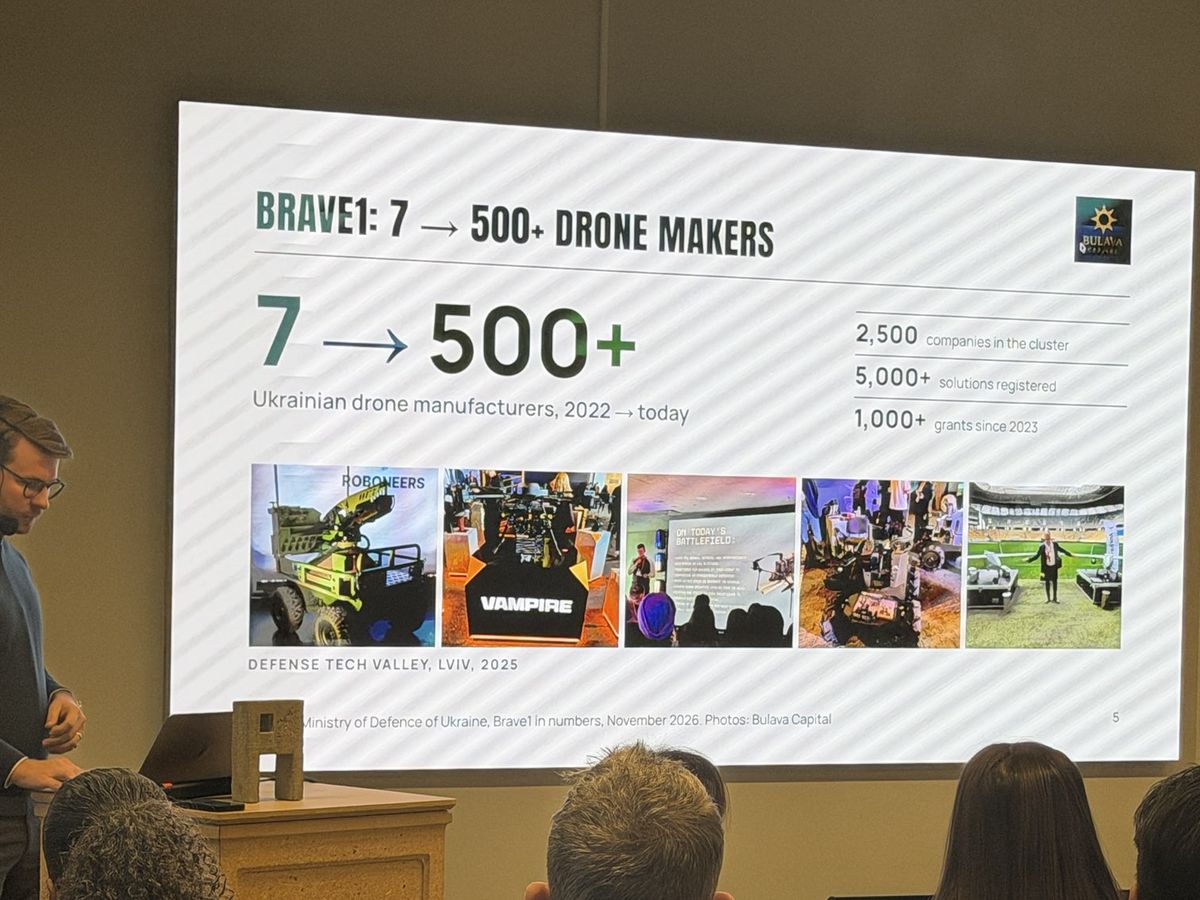
Ukraine's innovation model – Eric De Geer, Bulava Capital

Five lessons

Innovation organised around concrete needs, where solutions are tested in reality and improved in short cycles.

  1. Unite people around a shared purpose.
  2. Put responsibility and decisions close to the need.
  3. Test with the people who will use the solution.
  4. Share, learn and improve openly.
  5. Act fast and develop along the way.

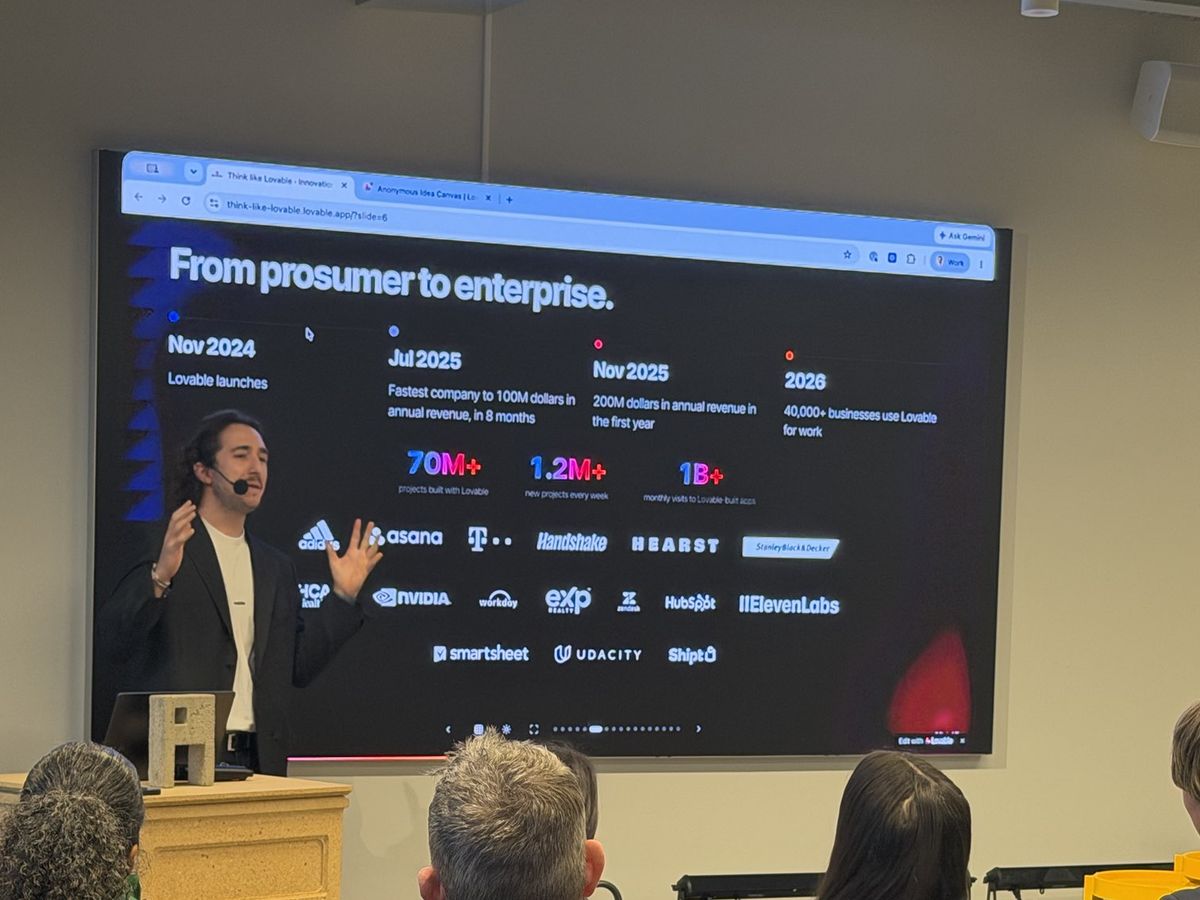
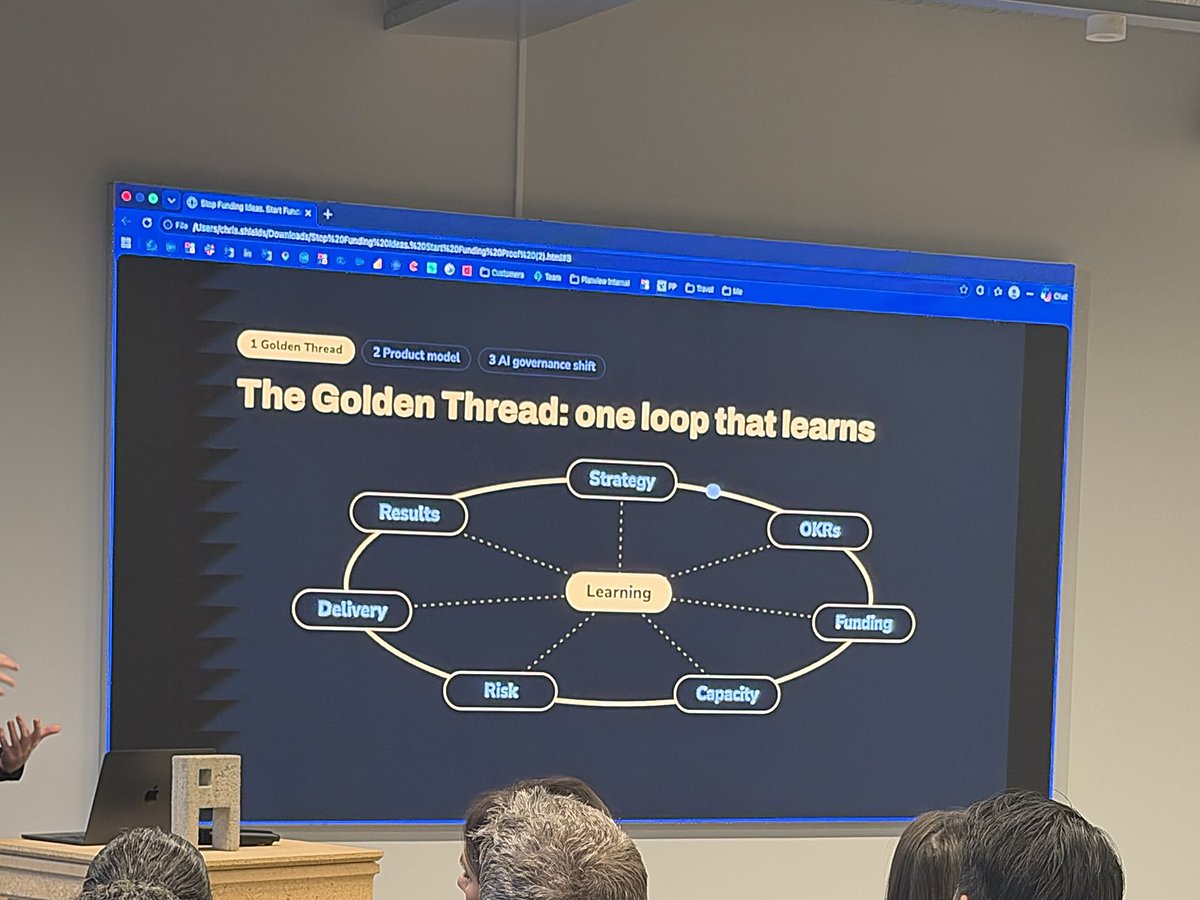
Planview and Lovable – Alexander Kollmann and Mario Pepe, Lovable

New ways of working and AI in the organisation

Planview argued for a continuous, customer-centred product model in which cross-functional teams own outcomes and adjust to new information, instead of long project and decision processes. Lovable showed how AI lets more employees build simple tools themselves and show a working prototype instead of an idea – but larger organisations need control over security, data access and ownership.

Pictures from day 2

Day 2's messageDon't wait for everything to be certain, fully planned or perfect. Choose a clear direction, start small, test with your users and build the ability to adapt quickly.

Holistal's workshop · Day 2

Being human in the digital age

Together with Mikael Thor Pestel, advisor at Holistal, I led a workshop where participants worked hands-on with the question of how technology can make us more human rather than less.

Nobody burns out on a Tuesday

Ill health costs Sweden over SEK 100 billion a year. The signals are there long before – but we spot them too late.

Your digital everyday

Which digital habits give energy and which drain it? And what really stops us from changing them?

Design for people

The groups sketched a solution that catches an early signal – poorer sleep, less movement, isolation or stress – in time.

The room's principles

Each group put into words what technology must never do to people. Together they became the room's manifesto.

From my presentation

Nobody burns out on a Tuesday

Ill health builds up over months. The signals are there – but we measure them too late, and almost all resources go to repairing rather than preventing.

SEK 102 bnwas the cost of long-term sick leave in Sweden in 2025
48 %of long-term sick leave is due to mental ill health
+21 %more people on sick leave for stress, 2019–2025
3 %of health spending in the OECD goes to prevention

Sources: Skandia, report on the cost of sick leave for 2025; Swedish Social Insurance Agency (Försäkringskassan), status report 2026:1; OECD, Health at a Glance 2025.

How Holistal works. The service senses each employee's context – a working day, a tough day, illness or holiday – and offers micro-habits that start from that situation. An AI coach is there every day, and real coaches when you need a human. HR sees the health status of each department in real time, always at group level, with early signals before they show up in sick leave.

See the presentation
"It is rarely knowledge that is missing. We already know what is good for us. What is missing is support at the right moment."
The workshop's conclusion after exercise 1
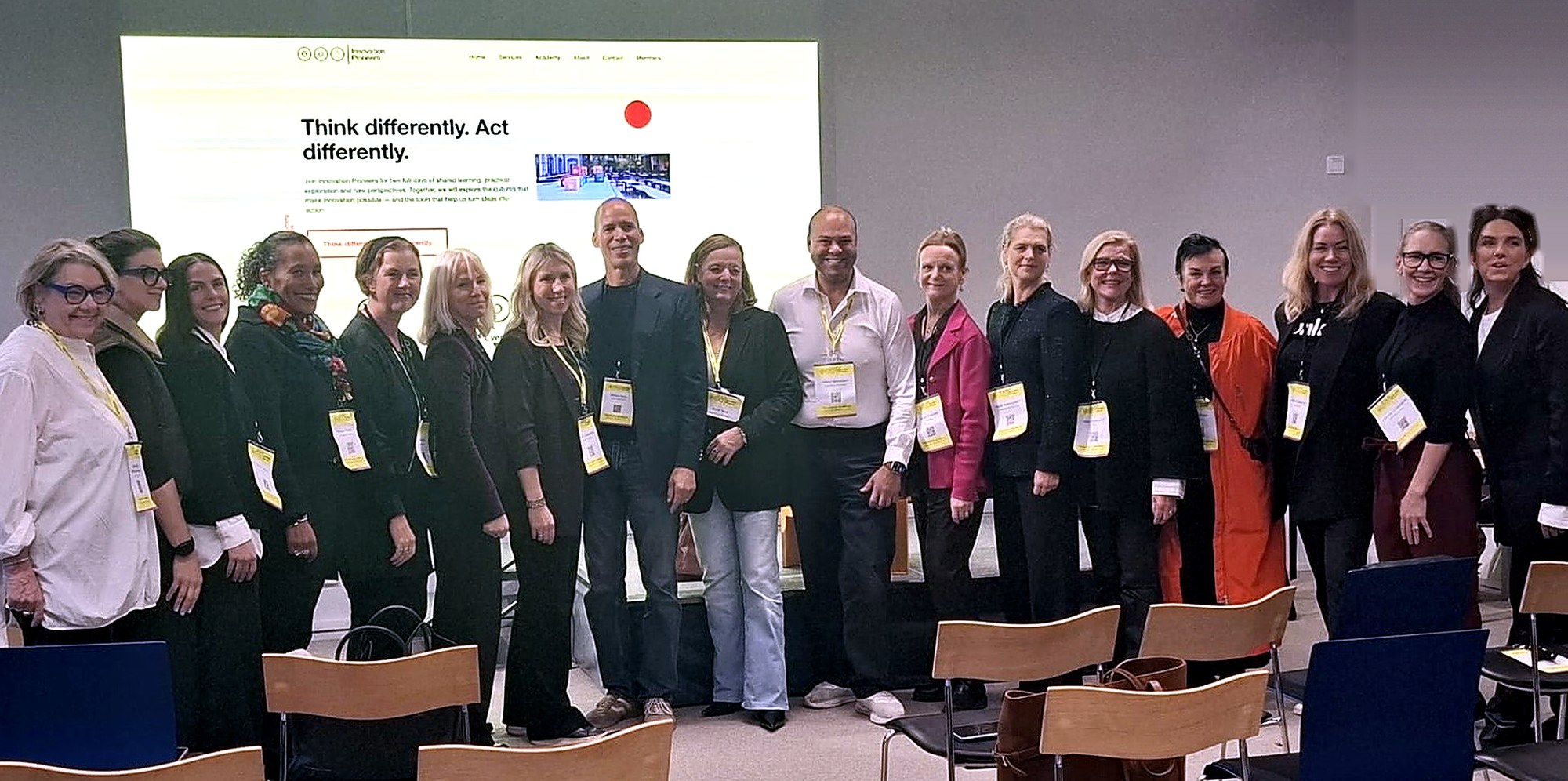
Group photo of participants in front of the stage at SIME 2026
Together at SIME 2026.

Collaboration with Linköping University and M4-HEALTH

A new model for health

Holistal collaborates with Linköping University and M4-HEALTH on AI and digital twins for personalised health support. Here, Gunnar Cedersund explains why the status quo is not an option.

Gunnar CedersundResearcher at Linköping University, research coordinator at M4-HEALTH and CEO of SUND – on an ageing population, rising ill health, AI and digital twins. 2 min 25 s, in Swedish with Swedish subtitles.

What it means for Holistal

Six things we take with us

Both days pointed in the same direction as our own work on preventive health: start in people's everyday lives, test early and give technology the right context.

  • Start from experienceThe experiences of employees and HR managers shape the next generation of our service.
  • Involvement before instructionWe create curiosity and engagement instead of just handing out advice.
  • Capture realityHow the workplace works in practice, not just what the policy documents say.
  • Give AI the right contextSo that the advice from the AI coach and the HR support is clear and useful – within clear rules for data and security.
  • Test with usersStart small, learn from feedback and show how input shapes development.
  • Stay true to Holistal's social valuePreventive health can strengthen the individual, the workplace and society.

Thank you to everyone who took part

A big thank you to Innovation Pioneers and Albert Bengtson for the invitation and a well-organised event – and to the speakers and everyone who joined our workshop. Want to know more about how Holistal works with preventive health in the workplace? Get in touch.

Read more at holistal.com
Birgitta Thörn
Birgitta ThörnCEO, Holistal · birgitta@holistal.com
Holistal · Science-based preventive health · November 2026